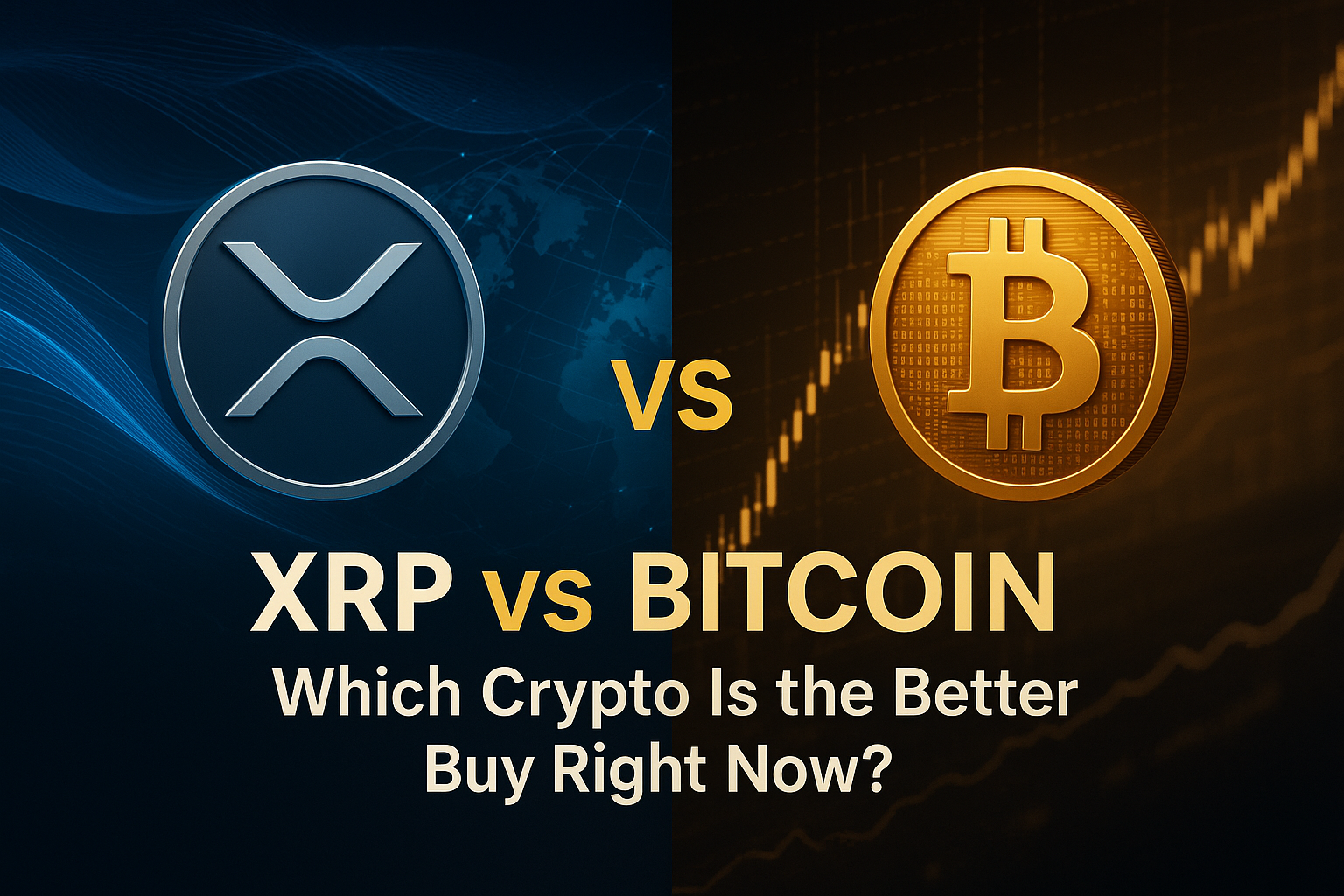
XRP vs Bitcoin: Which Crypto Is the Better Buy Right Now?
As cryptocurrencies gain wider adoption and the market matures, many investors are reevaluating their portfolios. Two digital assets often at the center of the debate are Bitcoin (BTC) and XRP. Both have unique roles in the crypto ecosystem, distinct regulatory histories, and different risk-reward profiles. With recent developments like the approval of spot Bitcoin ETFs and a shifting regulatory landscape for XRP, the question becomes more relevant than ever: Which is the better buy right now?
This article offers a data-informed comparison of Bitcoin and XRP, analyzing performance trends, market utility, regulatory outlook, and long-term investment potential. Whether you’re a seasoned investor or exploring digital assets for the first time, this breakdown provides a comprehensive foundation.
What Is Bitcoin?
Bitcoin is the original cryptocurrency, launched in 2009 by an anonymous developer known as Satoshi Nakamoto. Designed as a decentralized store of value, Bitcoin operates without a central authority. Its limited supply of 21 million coins, secure blockchain protocol, and proof-of-work consensus mechanism have helped establish it as “digital gold.”
Bitcoin is widely recognized by institutions and regulators across English-speaking regions. It has become a benchmark for the broader crypto market and a frequent hedge in times of economic uncertainty.
What Is XRP?
XRP is the native token of the XRP Ledger, created by Ripple Labs in 2012. Unlike Bitcoin, XRP is not mined. Instead, it was pre-mined with a total supply of 100 billion tokens. XRP was designed for speed, scalability, and low-cost cross-border payments, particularly in the financial services industry.
One important distinction is that Ripple Labs maintains significant control over XRP distribution, which has raised concerns about centralization. However, this same control has enabled Ripple to build partnerships with banks and payment providers in the U.S., UK, Australia, and other English-speaking markets.
Recent Performance and Market Sentiment
Over the past year, XRP price USD has shown impressive gains, increasing by nearly 400%. Much of this momentum followed favorable developments in Ripple’s legal battle with the U.S. Securities and Exchange Commission (SEC), where a court ruled that XRP sales on exchanges did not constitute securities transactions.
This regulatory shift helped improve investor sentiment and boosted speculation around a potential XRP exchange-traded fund (ETF) in the future.
Bitcoin, on the other hand, has maintained its role as the most dominant cryptocurrency. Bitcoin price has risen over 80% in the same timeframe, bolstered by macroeconomic factors such as declining interest rates and the approval of multiple spot Bitcoin ETFs in the United States. These ETFs have attracted more than $150 billion in institutional inflows, further entrenching Bitcoin’s position in traditional investment portfolios.
Utility and Real-World Adoption
Bitcoin: Store of Value and Digital Gold
Bitcoin’s primary utility lies in its role as a decentralized, censorship-resistant store of value. It’s often referred to as digital gold due to its deflationary supply model and its use as a hedge against inflation. However, Bitcoin is not widely used for day-to-day transactions due to slower confirmation times and higher fees compared to other cryptocurrencies.
In the U.S. and Canada, Bitcoin has gained broader acceptance with merchants, fintech apps, and institutional custodians. Still, its adoption as a transactional currency remains limited.
XRP: Cross-Border Payments and Financial Infrastructure
XRP was built to facilitate fast, cheap, and reliable cross-border transactions. Ripple’s On-Demand Liquidity (ODL) product uses XRP as a bridge currency, eliminating the need for pre-funded accounts and reducing capital requirements for banks.
This makes XRP particularly attractive in regions with strong remittance flows, such as the UK, Australia, and Southeast Asia. Regulatory clarity in the U.S. could pave the way for greater adoption by financial institutions.
Regulation and Risk Factors
XRP’s Legal Challenges and Progress
XRP’s regulatory journey has been complex. In 2020, the SEC filed a lawsuit against Ripple Labs, alleging that XRP was an unregistered security. This caused major exchanges to delist XRP, leading to a sharp price decline.
However, the legal landscape changed dramatically in 2023, when a U.S. federal judge ruled that XRP itself is not a security when traded on secondary markets. While the ruling didn’t provide complete clarity on all aspects of XRP’s regulatory status, it gave investors and exchanges more confidence.
That said, future litigation and regulatory actions still pose a risk. The possibility of stricter rules or unfavorable interpretations remains.
Bitcoin’s Institutional and Regulatory Support
Bitcoin enjoys clearer regulatory standing in the U.S., Canada, UK, and Australia. It is generally treated as a commodity, which puts it under the oversight of the Commodity Futures Trading Commission (CFTC) rather than the SEC.
With the launch of spot Bitcoin ETFs and increasing acceptance among wealth managers, Bitcoin appears less vulnerable to sudden regulatory shocks compared to XRP. Still, its environmental impact and energy use continue to be hot topics, especially in ESG-focused investment circles.
Long-Term Investment Potential
Bitcoin’s Strength Through Cycles
Bitcoin has weathered multiple boom-and-bust cycles over the last 15 years. Each time, it has returned stronger, gaining further legitimacy and market integration. Its network security, liquidity, and recognition across exchanges and jurisdictions make it a long-term cornerstone for many crypto portfolios.
Bitcoin’s scarcity model also makes it attractive in inflationary environments. Analysts continue to debate whether Bitcoin could surpass its previous all-time highs in 2025 and beyond.
XRP’s Speculative Growth Case
XRP’s potential lies in institutional adoption and regulatory tailwinds. If Ripple can continue to expand its partnerships and gain ETF approval in the U.S., XRP could see another wave of growth.
However, its centralization concerns and historical legal baggage may deter some investors. Moreover, competition from other fast-payment networks, such as Stellar (XLM) and central bank digital currencies (CBDCs), could dilute XRP’s market share.
Trading Opportunities Across Market Conditions
Bitcoin and XRP each present different strengths for traders:
- Bitcoin leads broader market momentum and offers deep liquidity.
- XRP often responds strongly to adoption developments and regulatory catalysts.
- Both assets show consistent market activity across different timeframes.
- Traders can use both for diversified strategies, including accumulation, breakout setups, and news-driven trading.
Platforms like Bitget provide the liquidity and tools needed to trade major assets like BTC and XRP efficiently. Pro Tip: Traders often monitor key price levels, ETF inflows, and major regulatory events to identify strong BTC or XRP setups.
When Bitcoin Might Be the Better Buy
- You want a more established, lower-risk option in the crypto space
- You’re looking for exposure to a digital asset backed by institutional infrastructure
- You prefer long-term stability over short-term gains
When XRP Might Be the Better Buy
- You’re seeking higher potential returns and can tolerate volatility
- You believe in Ripple’s technology and expanding financial partnerships
- You anticipate continued regulatory progress and ETF approval
Final Thoughts: BTC and XRP Serve Different Trading Strategies
Bitcoin and XRP each bring unique strengths to the market. Bitcoin offers unmatched liquidity, institutional support, and long-term stability as the market’s benchmark asset. XRP delivers fast settlement, strong utility, and potential upside tied to regulatory and institutional developments.
Rather than choosing one over the other, many traders hold both, using Bitcoin as a foundational asset and XRP as a high-momentum, catalyst-driven asset.
Staying updated on regulations, institutional flows, ETF progress, and real-world adoption helps traders position themselves effectively in both markets.
FAQs about XRP vs Bitcoin
Is Bitcoin or XRP the better investment right now?
Bitcoin is steadier with strong institutional support. XRP carries more risk but may offer higher upside if regulation continues to improve.
What is the main difference between Bitcoin and XRP?
Bitcoin is a decentralized store of value. XRP is built for fast, low-cost cross-border payments.
Is XRP still dealing with regulatory issues?
It has partial clarity after the 2023 ruling, but the case is not fully closed, so some uncertainty remains.
Why do many investors see Bitcoin as safer?
It has clear regulation in major markets, ETF support, and a long performance history.
Can I invest in both?
Yes, many investors hold Bitcoin as a core position and treat XRP as a higher-risk satellite.