A Luxury Pooja Room Can Make Marble, Lighting and Architecture Work Together
A prayer room can hold beautiful things and still feel restless. A carved arch pulls one way, a bright panel pulls another, and the eye of the beholder never settles anywhere for long. Most of the disappointment in a luxury pooja room comes from choosing elements one at a time instead of composing them as a single considered view.
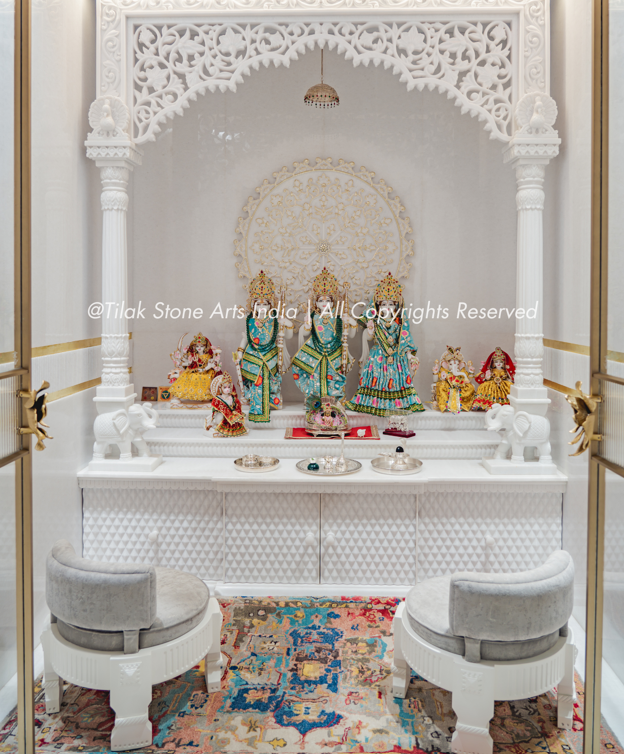
The correction lies in sequence. When the marble, the light sources and the built structure are drawn together from the start, a luxury pooja room settles into one composed space where every detail supports the shrine at its centre. Nothing competes, and the room feels calmer for it, even with a rich material selection.
Why Individual Details Often Compete instead of Composing
Too Many Statements Inside One Small Space: A prayer room turns busy when each element is designed to be looked at directly. A heavily carved surround, a strong stone vein and a bright glow behind the deity all demand attention at once. Choosing one element to lead and letting the rest support it is what produces stillness rather than visual noise.
What Happens When the Wiring Is Left until Last: Postponing the light layout until the marble is fitted removes most of the good options. Concealed channels cannot be cut cleanly into finished panels, so fittings end up surface mounted. In everyday project experience, designers see a luxury pooja room compromised at this final stage after every earlier decision was handled carefully.
Backlit Stone and Floating Platforms Change What the Room Does
Translucent Panels That Carry Light Through the Stone: Backlighting works because thin sheets of onyx and pale marble transmit light rather than block it, turning the panel itself into the source. The colour temperature behind the stone decides the result, since warmer output brings out honey and amber veining while cooler output flattens it into something clinical and unwelcoming for a prayer setting.
Platforms That Lift the Shrine Away from the Floor: A floating platform carries the shrine on a concealed bracket so the base appears to hover above the flooring. The shadow line underneath adds depth to a shallow room and keeps the stone clear of mopping water. Practical gain and visual gain arrive together in the same quiet detail, which is rare in a room of this size.
Carving and Finish Decide How Light Behaves on Marble
Relief Depth That Is Read Through Shadow: Carving becomes visible only when light crosses it at an angle, which is why depth matters more than pattern complexity. Classical proportion guidance recorded in shilpa shastra treats relief and recess as a measured relationship, and that discipline still explains why a deeply cut jaali holds interest when a shallow one disappears.
Finish Selected against Glare and Reflection: A mirror polish returns hard reflections that fight with any glow behind the deity, so it belongs on lower surfaces rather than the backdrop. A honed face scatters light softly and keeps the focus forward. White Vietnam marble and wonder white both take a honed finish that stays quiet under illumination.
Choosing between a Fitted Modular Unit and a Composed Interior
Where a Modular Unit Serves and Where It Stops: A modular prayer unit installs quickly, costs less and suits a rented flat or a room that may be reworked soon. The limitation is that it arrives with its own proportions and cannot respond to the wall, the ceiling drop or the sightline from the doorway. A composed design takes longer and answers all three.
Stone and Wiring That Outlast the Fashion Cycle: Marble panels can be cleaned, honed again and repaired many years after installation, which laminate and printed backdrops cannot survive. Drivers and fittings placed behind an accessible panel can be replaced without breaking stone. Planning for that access at the drawing stage is the difference between a lasting interior and a costly rebuild years later.
What to Settle before the Panels Are Ordered
Decisions Best Fixed While the Drawings Are Open: A handful of early choices decide whether the finished space looks composed or assembled. Each one is inexpensive to change on paper and expensive to change once fabrication starts. Anyone planning a luxury pooja room gains from resolving the following points before any stone is cut or any circuit is run.
- Fix the deity position and eye level first, because every light angle and carving depth follows from it.
- Confirm the thickness of any backlit panel with the fabricator, since translucency depends on how thin the stone is cut.
- Leave a serviceable access route to drivers and transformers behind the structure.
- Match the stone selection to the flooring and adjoining joinery rather than judging samples under showroom conditions.
- Plan a discreet cupboard for lamps, wicks and daily articles so surfaces stay clear.
- Check the switching arrangement early so the room can shift between full brightness and a quieter evening setting.
See also: Simplifying Business Launch with Expert Support
A Prayer Space That Holds Its Composure
A room designed as one composition rewards the household every single day, in stillness rather than spectacle. Leaving the coordination until the fit out has begun narrows the choices and raises the final cost. Book a design consultation while the drawings are still open, and let the luxury pooja room be planned as marble, light and structure together.