The Complete Guide to Luster Dust, Edible Glitter, and Cake Decoration
A beautifully decorated dessert can turn an ordinary celebration into something memorable. Whether it is a wedding cake, birthday cupcake, festive cookie, or handmade chocolate, visual presentation plays an important role in how people experience food. Colour, texture, and shine can all influence the appearance of a dessert, which is why modern bakers have so many decorative ingredients and techniques to choose from.
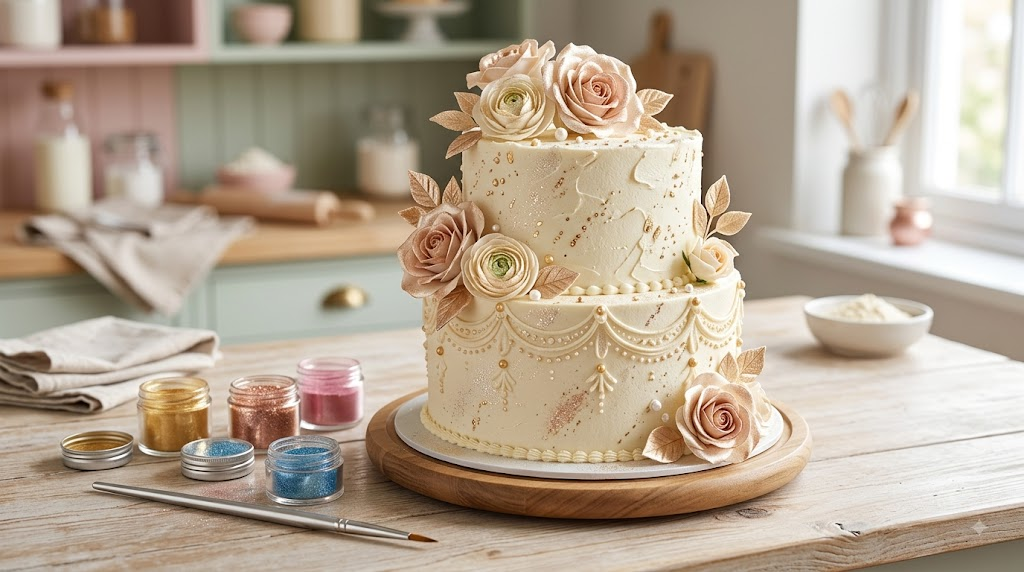
Among the most versatile options available to cake decorators is Luster dust. Its fine texture and range of colours make it possible to add subtle highlights, rich metallic effects, and elegant finishing touches to many types of edible creations. Alongside dust-based decoration, edible glitter has also become popular among home bakers and professional decorators who want to introduce sparkle and celebration-ready detail.
From simple cupcakes to elaborate wedding cakes, the right decorative finish can make a significant difference. Understanding how these products work, how to apply them, and how to combine them with other techniques can help bakers create desserts that look as impressive as they taste.
What Makes Luster Dust So Useful?
Luster dust is a finely powdered cake-decoration ingredient designed to add colour and visual dimension to edible creations. Depending on the shade and application technique, it can produce anything from a soft sheen to a noticeable metallic appearance.
One of its biggest advantages is control. Instead of applying a strong colour all at once, decorators can gradually build the desired effect. A light brushing may be enough to highlight a fondant flower, while several applications can create a more dramatic finish.
This flexibility makes it suitable for both beginners and experienced cake decorators. Someone learning basic cake decoration can use a small amount to add a finishing touch, while a professional pastry artist can incorporate different shades into highly detailed designs.
The range of available colours also makes it easier to coordinate decoration with a particular theme. Gold and silver can create a sophisticated appearance, while pink, purple, blue, green, red, or other colours can support more playful or creative designs.
See also: How to Balance Mom Life with Home Décor and Lifestyle
Why Edible Glitter Is Popular With Modern Bakers
There is something naturally eye-catching about sparkle. When light reflects from a decorated dessert, even a relatively simple design can appear more dynamic and festive.
Edible glitter is particularly useful when the goal is to create a celebration-focused appearance. It can be incorporated into birthday cakes, anniversary desserts, cupcakes, cookies, cake pops, and seasonal treats.
However, using glitter effectively is about more than simply adding as much sparkle as possible. Good decoration usually depends on balance. Strategic placement can draw attention to specific parts of a dessert without overwhelming the original design.
For example, a few sparkling accents around the edge of a cake can create an elegant border. Glitter can also be used to emphasise stars, flowers, lettering, geometric patterns, or other decorative elements.
Choosing Colours for Different Cake Styles
Colour selection is one of the most important decisions when decorating a dessert. The same decorative technique can produce completely different results depending on the shade being used.
Gold is often associated with luxury and celebration. It can work particularly well on white, cream, black, navy, or deep-coloured cakes. Silver offers a cleaner and more contemporary appearance and can complement winter or modern themes.
Rose gold is popular for romantic and elegant designs, while pink can work well for birthdays and soft pastel themes. Blue and green can be useful for nature-inspired creations, while purple can introduce a fantasy-inspired character.
When choosing a decorative shade, consider both the base colour and the overall theme. A shade that looks excellent on white fondant may appear very different when applied to chocolate or dark icing.
It is also helpful to test colours before working on the final dessert. A small sample can show whether the contrast is strong enough and whether the finish matches the intended design.
How to Apply Decorative Dust
Application technique has a major influence on the final result. Beginners should start with a small amount of powder and build the effect gradually.
A clean, dry food-safe brush can be used for many surface applications. Dip the brush lightly into the powder, remove excess product, and gently apply it to the intended area.
Small brushes are useful for detailed decorations because they provide greater precision. Larger brushes can be useful for broader areas where a softer, more even effect is required.
For best results, practise on a spare piece of fondant, modelling paste, or another suitable surface before decorating the finished dessert. This allows you to understand how much product is needed and how the colour behaves.
The gradual approach also makes it easier to correct mistakes. Adding more colour is usually simpler than trying to remove excessive decoration.
Creating Metallic Effects
Metallic finishes can make cakes appear remarkably sophisticated. Gold, silver, bronze-style shades, and other reflective colours can create the appearance of premium decorative details.
A metallic finish does not necessarily need to cover the entire dessert. In fact, selective application can often create a more refined result.
Consider a plain white cake with delicate flowers. Instead of covering everything with metallic powder, a decorator could highlight the edges of the petals or add metallic centres to the flowers.
Similarly, a dark chocolate cake can be given a luxurious appearance by applying subtle metallic accents to chocolate shapes or decorative patterns.
This principle of selective decoration is particularly useful for minimalist cake designs. A clean background provides contrast, allowing small areas of shimmer to stand out.
Combining Dust With Fondant
Fondant is one of the most useful surfaces for decorative dust because it provides a relatively smooth base. It can be shaped into flowers, leaves, figures, lettering, ribbons, geometric forms, and many other elements.
Once the fondant decoration has been created, a decorator can use different shades to introduce depth.
For example, a flower could receive a lighter colour around its edges and a slightly deeper shade toward its centre. This creates visual variation without requiring complicated painting techniques.
Fondant figures can also benefit from carefully placed highlights. Small amounts of colour can emphasise facial details, clothing, accessories, or other features.
Adding Dimension to Buttercream Cakes
Buttercream is another popular medium for cake decoration. While it is often associated with piping, decorative dust can provide an additional finishing layer.
Piped flowers, leaves, borders, and textured surfaces can all receive carefully applied highlights. A subtle shimmer over selected sections can help separate different elements visually.
However, decorators should consider the surface condition before applying any powder. A suitable, stable surface generally provides better control than one that is excessively soft or wet.
The goal should be to complement the texture of the buttercream rather than cover it completely. The natural dimension created by piping can become even more noticeable when highlighted with a carefully selected colour.
Using Decorative Effects on Cookies
Cookies offer an excellent opportunity for experimentation. Their smaller size means decorators can practise techniques without committing to a large cake.
Royal icing designs, fondant details, and shaped decorations can all be enhanced with carefully chosen colour or shimmer. This can be particularly effective for wedding favours, holiday cookies, party treats, and themed dessert tables.
For example, a set of white iced cookies can be given a consistent metallic accent that matches the event’s colour scheme. Alternatively, several colours can be used across a collection to create a coordinated visual theme.
Because cookies are often produced in batches, consistency is important. Testing the technique on one cookie before decorating the entire batch can help ensure that the final results look uniform.
Making Celebration Cakes More Personal
Decorating a cake is not simply about making it attractive. It is also an opportunity to reflect the personality of the event.
A child’s birthday cake might feature bright colours and playful sparkle. A wedding cake may benefit from understated metallic highlights. An anniversary dessert could use romantic tones, while a holiday cake could incorporate seasonal colours and glittering details.
Personalisation does not always require complex modelling or advanced piping skills. Sometimes, selecting the right colour and placing it carefully is enough to make the dessert feel unique.
This is one reason decorative dust has become such a useful addition to a baker’s toolkit. It allows a familiar cake design to be adapted for different occasions without completely changing the underlying structure.
Working With Edible Luster Dust
For decorators who want a more flexible approach to colour and shine, edible luster dust can be a valuable option. It can be used to enhance decorative details, create subtle highlights, and experiment with different visual effects depending on the product and intended application.
The most important consideration is always to read the product information carefully. Decorative powders are not necessarily identical, and their intended uses can vary. Always confirm that a product is appropriate for the specific food application and follow the manufacturer’s instructions.
When preparing desserts for other people, it is also sensible to check ingredient and dietary information, especially when serving guests with allergies or specific dietary requirements.
Tips for Beginners
Getting started with cake decoration does not require a large collection of specialised products. A few basic tools, a suitable dessert surface, and patience can go a long way.
Here are some practical tips:
- Start with simple designs. Practise on cupcakes or cookies before moving to elaborate cakes.
- Use small amounts initially. Build colour gradually instead of applying too much at once.
- Test first. Try the colour on a spare piece of fondant or icing.
- Choose complementary colours. Consider the cake’s base colour before selecting a decorative shade.
- Keep tools clean. Clean brushes help prevent unwanted colour contamination.
- Work carefully. Fine decorative powders can spread easily, so apply them with controlled movements.
- Think about lighting. Metallic and shimmering finishes can look different under natural and artificial light.
With practice, these simple habits can make the decorating process much easier.
How Professionals Create a Refined Finish
Professional-looking decoration is often less about complexity and more about consistency. Clean edges, coordinated colours, controlled application, and thoughtful placement can make a simple cake look polished.
Professional decorators also tend to think about the dessert as a complete composition. Instead of treating each decoration separately, they consider how colour, shape, texture, and spacing work together.
A metallic accent should have a purpose. Glitter should support the theme. Contrasting colours should help important details stand out.
This design-focused approach can make even relatively simple cakes look carefully planned.
The Role of Experimentation in Cake Decorating
There is no single correct way to decorate a cake. While established techniques provide a useful foundation, experimentation is where many creative ideas begin.
Try different brush sizes. Test contrasting shades. Apply a small amount to one section and compare it with a more heavily decorated area. Experiment with matte and shimmering surfaces.
Keeping notes about successful colour combinations can also help. Over time, bakers can develop their own preferred palette and application techniques.
This is particularly useful for anyone who decorates cakes regularly. A personal collection of reliable techniques can make future projects faster and more consistent.
Frequently Asked Questions
What is Luster Dust used for?
Luster dust is commonly used to add colour, shimmer, or decorative highlights to suitable cake and dessert surfaces. It can be brushed onto decorations and used to create different visual effects depending on the product and application method.
Is edible glitter suitable for cakes?
Products specifically labelled and intended for edible use can be used for suitable cake-decorating applications according to their instructions. Always check the product label and manufacturer’s guidance before applying any decorative ingredient to food.
Can luster dust be used on fondant?
Many cake-decorating dusts can be brushed onto fondant to create colour and highlights. A small test area is recommended before decorating the final piece, as the finished effect can vary depending on the fondant’s colour and surface.
What colours work best for wedding cakes?
Gold, silver, white, champagne-style tones, and rose gold are popular choices for elegant wedding designs. However, the best colour depends on the wedding theme, cake colour, venue, and overall decorative palette.
How can beginners use edible luster dust?
Beginners can start by using a small clean brush and applying a very small amount to a simple decoration. Testing the technique on spare fondant or icing first can help develop better control.
Can decorative dust be used with other cake-decorating techniques?
Yes, depending on the product’s intended use. Decorative dust can complement techniques involving fondant, icing, buttercream, chocolate, and other suitable decorating surfaces. Always follow the product-specific instructions.
Final Thoughts
Cake decorating combines technical skill with creativity. A simple dessert can become an impressive centrepiece when colour, texture, and finishing details are thoughtfully combined.
Luster dust, edible glitter, and edible luster dust give bakers additional ways to experiment with visual presentation, whether they are creating a small batch of cookies at home or preparing an elaborate celebration cake.
The secret is not necessarily using the most decoration possible. Instead, focus on choosing appropriate colours, applying them carefully, and allowing each decorative element to support the overall design.
With the right approach, a small amount of shimmer can transform an everyday dessert into something distinctive, elegant, and memorable.