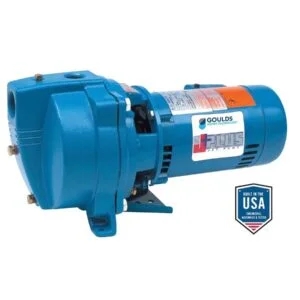
How to Keep a Jet Pump with Pressure Tank from Causing Water Damage in Your Home
In many rural Ontario homes, the well equipment sits in a basement corner, a crawl space or a small pump house. A jet pump with a pressure tank stays above ground, so any leak it develops ends up on your floor, your drywall or the boxes stored nearby. The good news is that most of these leaks give warning signs before they become a costly repair.
Where Leaks Start in a Jet Pump and Tank Setup
The pump, tank, and pipes between them hold water under pressure day and night. Threaded fittings can loosen as the pump starts and stops over the years. The shaft seal inside the pump can wear and begin to drip. These small drips often go unnoticed because few people spend time next to their well equipment.
Here is why the valves matter so much. Every pressurized well system should have a pressure relief valve near the tank or the pump. This valve opens if pressure climbs past a safe limit, which can happen when a pressure switch sticks in the on position. Without one, a fitting or even the tank can give way. Check where the valve discharges, too. It should point toward a floor drain, away from stored items and electrical panels.
Water can also leak in a direction you might not expect. A shallow well jet pump relies on a foot valve at the bottom of the suction pipe to hold water in the line when the pump shuts off. When that valve wears out, water drains back into the well, and the pump may lose prime. A pump that runs dry can overheat and ruin its seal, and a failed seal often turns into a steady leak at the pump body.
See also: How to Balance Mom Life with Home Décor and Lifestyle
Warning Signs Your Pressure Tank Needs Attention
A pressure tank holds a cushion of air above the water, usually separated by a rubber bladder or diaphragm. Over time, that air charge can drop. When it does, the tank fills with too much water, and the pump starts clicking on and off every few seconds. This rapid cycling puts extra strain on every fitting in the system.
The air charge is normally set about 2 psi below the pump’s cut-in pressure. You can check it with a tire gauge on the air valve at the top of the tank, with the power off and the tank drained. If water comes out of the air valve instead of air, the bladder has likely split, and you may need to replace the tank.
Steel tanks can also rust at the seams or along the bottom. A rust stain on the floor under a tank is easy to miss, so look closely.
Quick checks you can add to your routine:
- Look under and around the tank for rust, damp concrete or water stains.
- Run your hand along exposed fittings and feel for moisture.
- Listen for the pump starting more often than it used to.
- Watch the pressure gauge while a tap runs and note how fast it drops.
- Test the relief valve once a year, following the manufacturer’s instructions.
When did anyone last look behind your tank? In many homes, the answer is “not since it was installed.”
Protecting Well Lines from Freezing in Northern Ontario
Water expands by roughly 9 percent when it freezes. In a pump house, crawl space or unheated garage, that expansion can crack a pump casing, split a fitting or burst a pipe. The damage often stays hidden until the thaw, and then the water arrives all at once.
A few steps lower the risk. Insulate exposed pipes and the pump house walls. Use heat cable rated for plumbing on lines that run through cold spaces. Keep a small, safe heat source in the pump house if temperatures there drop below freezing. For a seasonal cottage, drain the pump through its drain plug, drain the tank, and open the taps before closing up for winter.
Next Steps If You Find Water Near Your Well Equipment
Start by switching off power to the pump at the breaker. Close the main shutoff valve if your system has one. Dry the area and take photos, since your insurance provider may ask for them. Then try to find the source. A wet fitting, a dripping pump seal and a rusted tank each call for a different repair.
Some fixes, like tightening a loose fitting, are simple. Others, like replacing a foot valve at the bottom of a well line or swapping out a failed tank, are better handled by a licensed technician.
Keeping Your Well System Dry and Working All Year
A well system that is checked once or twice a year tends to leak less and last longer. A local water system technician can inspect your pump, tank, and valves, test the air charge, and recommend a repair or a replacement pump or tank where needed. Book an inspection before the first hard frost so you can fix any weak spots while the weather is still mild.